

How To Play Animations In Skyrim Creation Kit
This page or department is incomplete. You can assistance by adding to it.
For more than information, run into the assist files, the style guide, and this commodity'southward talk page.
Creation Kit Usage may seem overwhelmingly complicated at get-go, and while information technology may take a while to completely sympathize, information technology is much easier if you have a guide to aid yous. This page contains tips on using the tool forth with explanations of multiple commonly used aspects. This is not a comprehensive folio on modding; cheque out the Creation Kit wiki for more help with that. If you are looking for data from the Creation Kit but do not know how to or cannot utilize it, you lot may put in a asking on this page.
Contents
- 1 Getting Started
- 2 UI
- 3 Cell View
- 3.one Return
- 3.2 Objects within cells
- iii.iii References
- 4 Object Window
- 4.1 Actors
- four.2 Quests
- 4.three Leveled lists
- 4.four Items
- 4.v Magic
- four.six Miscellaneous
- four.7 WorldData
- 4.8 WorldObjects
- 4.9 Apply info
- 5 Other
- six Encounter Also
Getting Started [edit]
You lot may observe the Creation Kit (CK) by heading to your Steam Library, clicking on "All Games" next to the search bar, and selecting "Tools". It is a free download for Skyrim PC players.
In one case the CK is open, click "File" at the tiptop and select "Data...". A list of files will announced. Double-click on the ones you wish to load. .esm files are master files; all mods are dependent on them. .esp files are plugin files; these are mods which cannot be loaded on their own. The only .esm files you should run across are Skyrim.esm, Update.esm, Dawnguard.esm, Hearthfire.esm, and Dragonborn.esm, depending on which ones you own. The latter iv are all dependent on Skyrim.esm and the concluding three are too dependent on Update.esm (which holds patch content), just they are not dependent on each other.
If yous would like to edit a preexisting modern file, double-click to add together it to the load listing and, keeping it selected (and then that information technology appears as a blue bar), click "Set as Active File". This means that any changes y'all make in the CK may exist saved to this file. If you lot do not select an active file, then whatever changes yous make may be saved every bit a new .esp file. It is strongly advised NOT to edit the .esm files.
Some items in the CK may have their IDs preceded past DLC01, DLC02, or BYOH. These denote Dawnguard, Dragonborn, and Hearthfire content, respectively.
You may save at any time when the CK is open. An asterisk means that a certain object has been inverse; an asterisk at the top of the screen (Creation Kit*) ways that something has been inverse since you lot opened the data files. If y'all attempt to close the CK without saving, it will give you a warning about saving your changes.
When loading files, cells, and a few other things, you may be given a warning about certain objects not loading correctly. This is normal and y'all may ignore the warnings in most cases.
UI [edit]
At the top of the master Cosmos Kit window is a list of functions nether which the chief points are illustrated.
- File
- Data... allows you to select files to load and to set every bit the active file (the file in which your edits volition be saved). If there is no agile file, so on exiting the CK y'all volition be prompted to save your changes every bit a new file.
- Edit
- Notice Text lets y'all search the unabridged CK for a term, including a Ref ID, which is very useful for finding a detail use of an object.
- View
- Yous may select which toolbars/items to show in the UI and certain items to show or hibernate in the Render window, such every bit trees and lights.
- Globe
- You may edit the properties of world spaces, regions, and cells. You may also create local maps, which volition export a grey map of the selected expanse to your \Skyrim\Data\Textures\Maps\Skyrim folder.
- NavMesh
- You may use this to set up a path to tell actors where they can walk and navigate.
- Character
- Actor Values allows you lot to edit base values that are applied to all actors.
- Gameplay
- Assist
Cell View [edit]
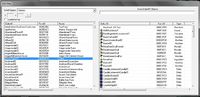
In the cell view, the first important section is the Globe Infinite drop-down listing. Most of them take recognizable names, such every bit Blackreach or DLC2SolstheimWorld. Each world space only involves the outside earth. Interiors, on the other paw, contains all inside locations, such as houses and castles.
In one case you have selected a globe space to look at (using Interiors every bit an example here), yous will run across a list of cells in the left section of the window. They are automatically sorted alphabetically past "EditorID", a unique name given to every object in the game to make data sorting easier. Past clicking on "FormID" or "Proper name" at the top of the listing, yous may sort alphabetically by those values instead. "FormID" is a unique number given to each particular and "Name" is what you come across in-game. Well-nigh names are similar to the editorIDs, but sometimes it is easier to sort past proper name.
The first two cells in the list, AAADeleteWhenDoneTestJeremy (or TestTony) and aaaMarkers (or Marker Storage Unit), are test cells. You do non need to worry almost them; you won't see them in the game unless you lot access them via the console.
Decide on a cell from the list that you want to use. Left-click on it once. (For a guided example, apply AnisesCabin01, which uses the name Cellar.) Yous will see on the right one-half of the Jail cell View window a listing of items, again sorted past editorID, but also sortable by formID, type, buying, lock level, loc ref blazon, persist location, initially disabled, or leveleditem; you may not sort by the item'due south proper noun. Y'all may also search through these items past typing something into the search bar above the objects, below the words saying [Jail cell editorID] Objects (such as AnisesCabin01 Objects). Virtually interior cells volition comprise a volume of some sort; type "volume" into the search bar and see what items come. There should exist four of them in this instance cell.
If y'all double-click on AnisesCabin01 on the left side of the window, then the Render window, which starts out with a greyness background, volition load the cell for you to view. If yous double-click on an item in the left side of the Cell View window, the cell will also load in the Return window, but centered on that object. Yous may receive a warning about an object being unable to load; select "Yep to all" to ignore the warnings, equally they should non impact anything.
Render [edit]
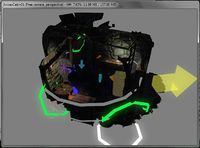
You must select the Render window to use information technology. Here is a quick list of controls:
- Delete object: Right-click on an particular and select "Delete". Alternatively, left-click to select it and then hitting the "Delete" key on your keyboard.
- Motion object: Left-click on an item to select it so left-click and concur while moving the mouse to drag it around the cell.
- Move view: To move around the entire cell in the window, click and concur the roll cycle and motility the mouse around.
- Rotate view: To rotate your view of the jail cell in the window, concord the shift key and move the mouse around.
- Select: To select an detail, left-click it once.
- To select multiple items, left-click and drag your mouse to encompass all the items you desire to select.
- Zoom: Utilize the scroll bike on your mouse.
If you open AnisesCabin01 and zoom out, you volition notice a large red square on your screen. If y'all are simply looking at the prison cell or otherwise exercise non mind altering it, you may select this red square and delete it to make the cell more easily visible. No changes volition exist saved unless you save them yourself.
Objects inside cells [edit]
Nigh objects, such as books or alchemy tables, appear as they would in the game. However, a number of objects appear as bright colors.
- Blue arrows mark where sure texture objects are placed, such equally puddles or Shadowmarks.
- Gray shapes betoken where fog or wind is placed.
- Gray lightbulbs are light sources.
- Green shapes be effectually certain static objects. In the example cell, the three light-green shapes are around cobwebs.
- Ruby-red items are triggers. These are used to start or progress quests or events.
- Orange items are leveled or random items. For example, of the potions in the instance cell, both named DummyPotion, ane volition be a leveled Fortify Enchanting potion and the other a leveled toxicant, as indicated in their references.
- Orange and blue objects are activators. This means that either y'all or an NPC may perform an action here. Activators are ordinarily automatically attached to certain items, such as arcane enchanters (allowing you lot to enchant objects), ore veins (allowing you to mine ore), and wood blocks (allowing you to chop woods). In outside cells, in that location are usually a number of tiny ones lying about that allow bugs to state on plants or the basis.
- White shapes betoken a audio effect.
- Yellow objects are door markers. They indicate a transition to a new area and are always continued to a second one in a separate cell. These objects appear every bit rectangular prisms with a darker yellow pyramid attached nearly the tiptop.
- Yellowish arrows are north markers. They point towards whichever direction will be marked north on the in-game compass.
References [edit]
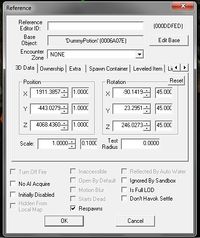
When you double-click on an object in the cell in the Return window, you will run into a reference window popular up. Not every object's reference window will have the aforementioned tabs or information. At the superlative is a space for a Reference Editor ID, which is a unique proper noun you may give to that unique object in the Creation Kit. For case, you lot could name a potion AnisesCabinPotion1. It does not alter the object in any mode and only makes it easier to find. Beneath that bar is a infinite named Base of operations Object. Y'all may click on the "Edit Base" button to view the basic item's information. Beneath that is Encounter Zone.(?)
Beneath these bars are various tabs, each with unique functions:
- 3D Information lists the XYZ dimensions of the item. Altering this or altering the scale can make an detail larger or smaller.
- Buying notes whether the item is owned by an NPC or a faction. Many of these factions are not joinable by the role player. If the particular is owned by a faction, information technology may take a rank that information technology is owned by. If information technology is endemic by an NPC or faction and you are non at the correct rank in the faction or friends with the NPC, and so taking the item will be considered theft.
- Extra has a list of somewhat unrelated values. These include how many objects are in that spot (usually 1), how much health a person may take, the accuse on an enchanted object, the soul within a soul gem, and a few other values.
- Spawn Container (?)
- Leveled Item shows whether or non an object is leveled autonomously from its Base Object. The Leveled Item Base of operations Object is a list containing various items that change based on your level. Usually you can tell what information technology is from the editorID it displays. For the potions in AnisesCabin01, one uses LItemPotionFortifyEnchanting while the other uses LItemPoisonAll.
- Linked Ref and Linked From signal whether an object is continued to some other in some way.
- Activate Parents {{{huh}}}
- Enable Parent: A reference having an enable parent is only enabled while the parent is, if the "Prepare Enable State to Opposite of Parent" checkbox isn't selected. If it is, the reference is only enabled while the parent isn't enabled.
- Emittance allows an object to emit light, which may vary based on whether the object is within or outside.
- MultiBound
- Location Ref Blazon
- Scripts can requite the object a sure script, which can alter it in whatsoever manner possible based on what commands are in the script.
At that place are likewise a number of checkboxes beneath these tabs. The near of import of these are "Initially Disabled" (which will disable an object until a script or quest enables information technology), "Respawns" (which will respawn the object after a certain amount of fourth dimension), and "Starts Dead" (which will spawn an NPC as a corpse).
Object Window [edit]
The Object Window has a Filter bar at the acme left; this is essentially a search bar. It will only search for editorID and formID and will not search for a name. To search through or see all objects, select *All from the bottom of the left-hand list.
Actors [edit]
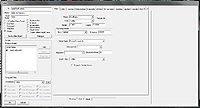
Explain all tabs. Also add together relationships, races, voicetypes, factions, etc. under "character" section.
The first department of the Object Window is Actors. If you expand this, in that location will also be Histrion, Actor Action, BodyPartData, LeveledCharacter, Perk, and TalkingActivator.
Nether the Role player subsection, at that place volition be a list of all NPCs in the game. This includes creatures amidst the regular people you lot communicate with in the game. To view an NPC's information, double-click on the name.
On the left side of the Actor window will be a number of checkboxes determining sure aspects the thespian has. Is Chargen Face Preset determines whether or not the thespian'due south face is selectable as a preset when creating your grapheme. Essential will make the actor unkillable. Protected will make the actor unkillable past anyone except for you. Invulnerable will make them immune to all damage and effects. Unproblematic player (?). Respawn, Unique, Summonable, Is Ghost, Doesnt [sic] Bleed, and Doesn't bear on stealth meter do as they say. There is also a box that shows what scripts apply to the histrion. At the bottom left is template data. The template is an NPC from which the selected actor takes certain aspects. If there is a template used, you lot may select which aspects are used by clicking on Use Traits, Use Stats, etc.
There are various tabs at the top of the Actor window with lots of information most the NPC:
- Traits
Most of this section is self-explanatory. Each role player has a race; there are lots of possible races to choose from. FoxRace is a placeholder race. There is also a checkbox to marking if the actor should be female instead of defaulting to male person. Acme is typically 1.0000; weight has fiddling upshot on the game. Skin alters a character's appearance without giving them the items that would usually brand up such an advent. Voicetype is merely the voice that an actor has, which volition also limit the lines they can say. Disposition is their base of operations disposition towards you. Expiry Particular is an object that volition exist spawned on the corpse of the NPC at death and thus cannot be pickpocketed.
- Stats
Leveling Data determines whether or not the role player is leveled and, if so, by what corporeality. A leveled actor's level scales with the player's. If there is a leveled multiplier, then stats for the actor are automatically calculated. To alter these stats, you may add a positive or negative value to the Wellness/Magicka/Stamina Offset sections. You may also select the actor'south class and manually modify the points they have in all their skills.
- Factions
This contains a list of factions that the NPC is in and their ranks in those factions.
- Relationships
This shows the relationships that the player has with other NPCs. These tin be family, friend, or enemy relationships, and bear on sure quests such every bit this one. Note that non all relationship values are actually correct concerning in-game occurrences; some NPCs may exist listed as siblings or parents when they are in fact unrelated, for example.
- Keywords
This is a listing of keywords applying to the NPC. They are used to determine a number of things; for instance, the ActorTypeUndead keyword will make an NPC be treated as an undead being, involving weapon effectiveness against the thespian and whether they can be seen via Detect Life or Notice Dead.
- AI Data
These values determine what sorts of crimes the NPC will report and how they will acquit in combat. Aggro radius behavior determines how close an enemy needs to be before the actor warns them (usually by drawing a weapon and watching the enemy), attacks them, or does either one. Gift Filter(?).
- AI Packages
AI Packages are an actor's daily behavior. They are ordinarily named using three to iv sections: Faction or place, activity, start time, elapsing. For example, in Aela's packages, her first one is CompanionsShift1Train15x5. This indicates that she volition train starting at 15:00 (3pm) and cease five hours subsequently. The top packages has top priority; if Aela had another parcel maxim CompanionsShift1Eat15x6, she would only eat for one hr instead of half-dozen, because the get-go five hours are spent training. You can see specifics nigh the package by double-clicking on it; this will show whether it allows for eating, sleeping, and other actions during that time.
Generic packages accept Sandbox in the name forth with a designated area in which the player may do generic activities, the default being 512 units.
- Inventory
This lists the objects that an NPC has in their inventory, along with the corporeality. If an object'southward ID ends in a number, that number is the per centum gamble that the NPC will have the particular (unless the number is very pocket-size, in which case it is simply a office of the item's unique ID, such as Torch01). Any outfits or clothing that an NPC is wearing will be dropped on decease unless they are unwearable.
Some of these leveled or random objects, or objects with percentages, may be plant under Items -> LeveledItem in the object window.
- SpellList
A listing of spells and perks that the actor has.
- Sounds
(?)
- Animation
(?)
- Attack Data
This determines what attacks an actor may use and how much damage they do.
- Character Gen Parts
This is what the graphic symbol looks like. You may preview the total character or just their head past marker the advisable checkboxes at the bottom of the window.
- Graphic symbol Gen Morphs
These touch on the specific shape of the actor's facial features.
- Face Anim Preview
This allows you to preview what an histrion's face will look like during certain animations.
Quests [edit]
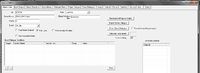
Objectives and stages, hidden quests (achievementsquest, etc.), wilderness interactions, reading scripts. Explain all tabs. Explain global tags from "misc" department.
Under the Graphic symbol department you will discover the Quest subsection; this is where all the quests are. Unlike NPCs and cells, their editor IDs are not similar to their names. Below is a list of quest ID formats and what they mean, if they are not obvious like BardsCollege:
| ID | Significant | Notes |
|---|---|---|
| ArenaCombat | Windhelm Arena | Not added in the game |
| BQ | Compensation Quest | |
| C CR | Companions | CR is radiant |
| CW | Civil War | CW##A indicates an Imperial quest; CW##B indicates a Stormcloak quest |
| DA | Daedric | |
| DB | Dark Brotherhood | |
| dun | Dungeon | |
| Freeform MS | Miscellaneous | |
| MG | College of Winterhold | Stands for "Mages Guild" |
| MQ | Master quest | |
| RH | Radiant Dawnguard | Stands for "Radiant Hunter" |
| RV | Radiant Volkihar | |
| RR | Raven Rock | |
| TG | Thieves Club | |
| TT | Tel Mithryn | |
| VQ | Volkihar | |
| WE WI | Wilderness events and world interactions |
Many quests exist merely to hold dialogue besides, and some to human action out picayune scenes. Multiple quests have intro or startup quests that run before them to set them upward. These quests, along with WE/WI quests, practice non announced in your quest journal.
The quest window has various tabs in it. Anything that happens in a quest is as well recorded in the quest script.
- Quest Data
The type of quest will decide what scrollwork image is shown next to it; information technology is purely aesthetic.
- Quest Stages
When you lot select a quest stage, its script (under Papyrus Fragment) and journal entry are shown. The script tells you lot at what stage an objective is shown or completed by saying setObjectiveCompleted(#) and then setObjectiveDisplayed(#).
- Quest Objectives
The number of the objectives and the objectives' text will exist shown here. Conditions for the objective to be shown will be listed beneath this.
- Quest Aliases
This is a list of NPCs and objects required to progress the quest. Certain aliases may be optional or required, and they may be set to start the quest expressionless or live. They can accept special inventories, scripts, keywords, factions, or spells for the quest.
- Dialogue Views
Conversations betwixt the role player and other NPCs are displayed here in dialogue trees.
- Role player Dialogue
The aforementioned conversations displayed in the previous tab volition be shown here in a different format, but may simply exist viewed one branch at a time. Each branch will take topics to select from, the dialogue of which will then be displayed. Double-click on the dialogue to view the conditions, speaker, and other such data. After bringing up the Topic Info window, yous may double-click on the Response Text to bring up an Edit Response window. This volition show dialogue notes, animations, and emotions. To heed to the audio, double-click on the path nether the Audio department of this window.
- Favor Dialogue
(?)
- Scenes
Scenes are conversations between NPCs which do non involve the player.
- Scripts
Every quest has at least one script attached to it; some use multiple scripts.
Leveled lists [edit]
Under Items -> LeveledItem you will find items that are leveled or random. They tend to accept a bones naming scheme. If at that place is a detail number fastened to the name, similar l or 75, this is the percent run a risk that it has to appear. Specifically leveled items will unremarkably have LItem in the name. For leveled NPCs, they are all listed nether the Actors -> Actor department, usually with the words Enc or Lvl in them.
Items [edit]
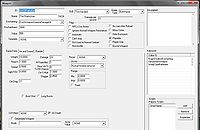
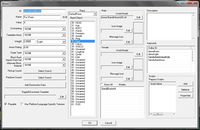
Ammo may be marked as bolts; otherwise, it is arrows. Ammo and weapons have specific damage values. Armor, weapons, and ammo all have inventory icons, pickup/putdown sounds, visual models, and values, and may exist marked as playable or not. Weapons and armor may be enchanted. The rest of the sections should exist self-explanatory.
Books evidence their text, which has font and size designations. Ingredients use magic furnishings. Keys do not have locking information on them; doors are what determine which keys may open them. Outfits are collections of items which NPCs wear.
Magic [edit]
- Enchantment, Potion, Whorl, Shout, Spell: Uses one or more than effects at sure magnitudes and durations.
- LeveledSpell: Used by NPCs. Randomly selects from a list of spells to give i to an NPC, or has only a per centum to do and then.
- Magic Result: This is the nearly important section. It determines most aspects of a spell, enchantment, or potion, including how the impairment is done and what type of harm it is. Information technology doesn't exist on its ain, but is used by other objects.
- Word of Power: Words of ability for dragon shouts. They show the dragon word and translation, but don't do annihilation on their own and are instead used past other objects.
Miscellaneous [edit]
Keywords may exist added to anything in the game. They do zilch on their ain except to tag an item. A quest or script may read this tag and so use it, however. For instance, the WeapTypeIron keyword may be added to an iron weapon and then that it is temperable with iron and and so that it is effective against any creatures sensitive to fe.
LoadScreens are but loading screens. They all have the foggy effect and black background, only you may change the model or message that is shown. The scale, rotation, and other tweaks apply to the model used in the screen.
Messages will evidence up during gameplay when an in-game action triggers them. They tin be shown every bit a message box, which volition interrupt gameplay, or every bit a basic message, which will show upwardly in the superlative left-hand corner during gameplay.
WorldData [edit]
- Climate: You may alter the length of days, sunrise, sunset, which moons appear, how long a moon phase lasts, sun color, sun glare, and weather blazon. World spaces use climates.
- Lighting: Change ambient, fog, directional, and specular lite colors in worlds and cells.
- Location: These determine map markers and which cells are in certain locations. The blazon of map marker is determined past keywords. Whether or non a location is clearable also depends on keywords. The parent location is ordinarily a agree or a city.
- Location Ref Type: Determines the color of markers for items inside the Creation Kit when viewing a loaded cell.
- Shader Particle Geometry: In these, images are used in unlike sizes and densities to create a certain visual consequence such as rain or snow.
- Visual Outcome: All sorts of visual effects are managed here, including those for spells.
- WaterType: You lot may determine the water's colour, opacity, and other aspects, including how much damage it will exercise (if any at all).
- Weather: Alter current of air, sky color, clouds, precipitation, and other such things to do with weather condition.
WorldObjects [edit]
These are the objects which you discover throughout the world.
Utilise info [edit]
With any object, you volition see "Count" and "Users" listed as numbers. Right-click on 1 such detail and select "Use Info". At that place volition be ii charts: The top ane shows you what uses the objects while the lower i shows you the cells in which those objects are placed and how many are at that place. To select and view an object in its cell, double-click on the prison cell y'all wish to see. To view an object's user's information, double-click on the user'southward proper noun. For example, an NPC volition probable be used past a quest; double-clicking on the quest name from the use info window will open the quest window, but won't directly show you how an NPC is used.
Other [edit]
Other deportment which are possible just do not fit into whatsoever specific department.
- At whatsoever fourth dimension, you can press CTRL+F5 to consign the currently selected tabular array to a text file.
See Also [edit]
- Cosmos Kit Wiki
Source: https://en.uesp.net/wiki/Skyrim_Mod:Creation_Kit_Usage
Posted by: shieldsyourst39.blogspot.com
0 Response to "How To Play Animations In Skyrim Creation Kit"
Post a Comment