

What Does Animal Night Vision Look Like
Past: Parenting Desk-bound | New Delhi |
Feb 21, 2021 v:16:05 pm
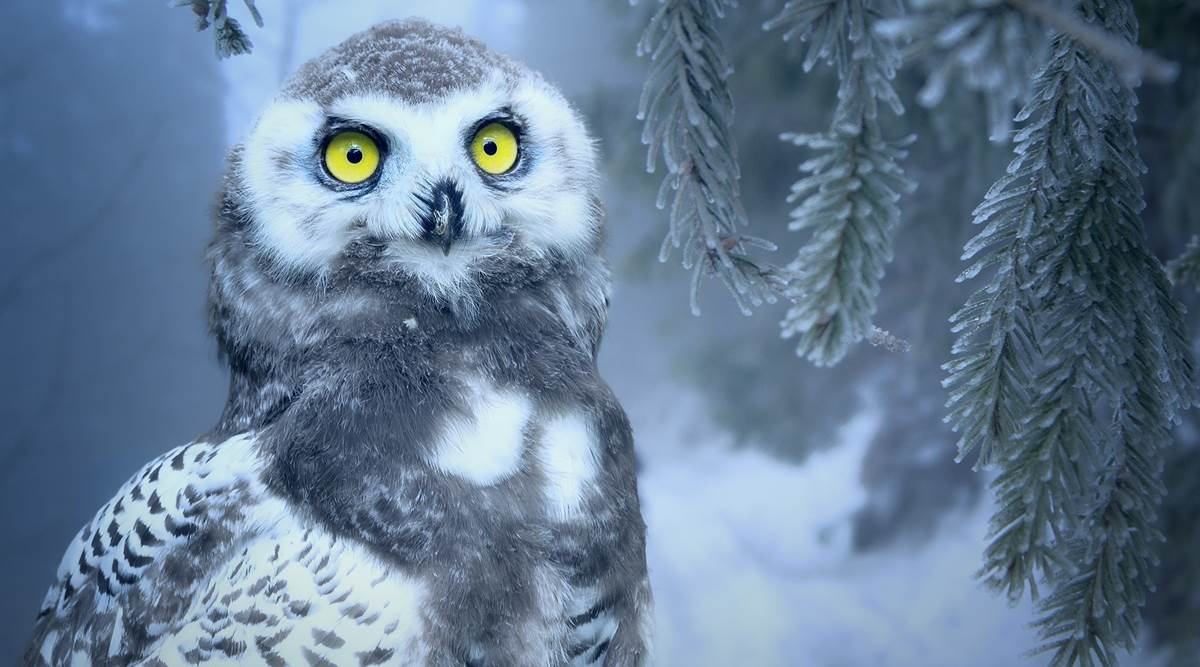 Animals like cats, wolves, foxes, mice, bats and owls are active well-nigh exclusively in the dark. They hunt at dark and stay safety from predators because of their ability to come across in the dark. (Photo: Pixabay)
Past Meenambika Menon
What happens when we enter a night room, from a well-lit place? We take some time to adjust our vision till we are able to see things in the room clearly. Why do you think this happens? The educatee of our eye widens in the dark to go far more low-cal. This means if we had wider pupils and bigger eyes we would have been able to run across in the dark, isn't it?
This is true for many animals around u.s.; the most common ones we know are cats and owls. Animals similar cats, wolves, foxes, mice, bats and owls are agile almost exclusively in the dark. They hunt at dark and stay safe from predators because of their power to run into in the night. In fact, for these animals which are also chosen nocturnal animals, their vision is amend at night equally compared to the day.
What is different in the eyes of these nocturnal animals that we lack in ours?
Best of Express Premium
As mentioned earlier, not only do these animals have bigger eyes than humans, their pupils also tend to open wider than ours which help in letting in more light. For example, the optics of an owl are so big that they occupy more than half the volume of its skull. Owls' optics are also tubular and its large middle lens is positioned shut to the retina which allows a lot of light to fall on the retina. It can encounter so well in the dark that it tin can probably sense a mouse anywhere on a football basis in the low-cal of a single candle.
Many such animals accept a layer behind their retinas, which is chosen a tapetum. The tapetum reflects the light coming through the retina once over again onto the retina, just like a mirror. This gives the retinal cells a second gamble to sense the same image. This tapetum too makes their eyes glow in the night.
You lot know that our retina has 2 types of light-sensing cells: rods and cones. Cone cells aid in sensing colour but crave bright, focused calorie-free, whereas rods tin sense very dim, scattered low-cal.
Nocturnal animals accept more rod cells in their eyes as compared to humans and other animals active during the twenty-four hours. These rod cells serve as light receptors and help them run across in dim light. For example, cats have 25 rods cells per single cone cell in each heart, as compared to united states humans, who have iv rods per cone cell. Hence, a cat needs just one-eighth of the amount of light we would demand to see things.
For nocturnal animals to exist agile at nighttime, it is not just their ability to see in the dark but also their highly adult sense of hearing, bear upon and smell. Bats as well use ultrasonic sounds to sense the presence of their prey. Snakes rely less on rods in their retinas and more than on thermal vision, which lets them sense the body estrus of nearby animals.
Then now you lot know how these animals score over us when it comes to seeing in the dark! Each night as darkness falls, we wind up our day whereas for these animals it is time to start theirs.
Reference: reconnectwithnature.org; northernwoodlands.org
(The author is Head – Senior School, Shiv Nadar School)
© IE Online Media Services Pvt Ltd
Source: https://indianexpress.com/article/parenting/learning/a-science-teacher-explains-how-do-some-animals-see-better-at-night-7198284/
Posted by: shieldsyourst39.blogspot.com
0 Response to "What Does Animal Night Vision Look Like"
Post a Comment